Let us continue with our effort to sketch out “a whole picture” of a leader. As I humbly admitted in part one, this is not a theory, nor a framework, instead this is food for thought kind of a text. The question here is, what is a leader, what kind of elements are important when we talk about leader and what kind of phenomena can be connected to the word leader. This blog also takes up the question how other people around a leader will perceive a leader and how sharp-witted they are in determining the effect of leader in their life.
Perhaps this blog might give to a leader new perspectives to reflect how wide and many sided her/his effect to others actually is. Also this text may make us to reflect how widely and cleverly people around a leader continuously examine how a leader operates. As we shall see a leader is experienced as a leader in many ways: it is important what a leader is, how s/he reacts to different things, what s/he says, how s/he says what s/he says and much more.
Clearly this text builds on a notion of socially created reality. Hence, it is proposed that we have, at least to some extend, a role in that complex interaction where we create the reality where we live in. Here we focus on work related life and in that sphere of life a leader has a pivotal position in the reality creating process.
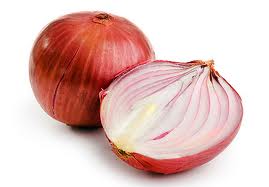
In part one we started from the core of an onion. We proposed a picture where a leader stands in the middle and s/he is surrounded by five layers, a bit like an onion has layers. Thus in the core of our picture is a leader him-herself. Here we examined a question what entity enters in an any given setting when the leader comes in. Then we started to talk about the first layer, in a way one realm of phenomena where leadership appears. In our discussion this first layer of leadership was named as gestures - layer.
Now, in this part two we travel through next two layers and we shall see that all the time these layers are material for people around a leader examine how a leader on his/her part builds the reality where people live on during their workdays and beyond. As we all know working day is not a strictly limited number of hours but it is part of our life. Hence work is both done and experienced in many ways and in many places - for instance it may happen in the evening when one is enjoying his so called free time and is deeply focused on the episode of Bold and beautiful, some work related idea comes in the mind...
It is proposed here that our Onion model may help us to examine how leadership weaves itself as part of our experience of life. Next we name the five layers in our Onion model and we propose that these layers are in logical order. The logic of the order is as following: the first layer is tightly connected to the physical being of a leader. The idea here is that when we proceed other layers of a leader these layers relate and they are originated by the leader but the connection to a leader can be rather remote, both in physical terms and in time. Sounds interesting?
Let us name the layers first and then talk them through. In our Onion model the leader herself/himself is the core and the layers around him/her are: 1)gestures, 2) words, 3) action, 4)setting and 5) image.The part one of this blog outlined the Onion model and discussed about gestures layer. This part two goes deeper into the Onion analogy and discusses about layers two and three, ie. about words and action.
Words are certainly important and a leader operates through words. In his excellent book Koestenbaum tells a story where executives of a car company challenge the educator in a seminar by saying: what is truly your real capability because you only talk and whereas we build cars. At this point the educator asked that could the participants show the wrenches and screwdrivers what they use. As we can guess this episode demonstrated the importance of words in car manufacturing and in executives toolbox in general.
In fact it is most valuable to examine and to be aware how words as used in different situations and what kind of consequences different uses of word create. For instance so called speech act theory offer an interesting starting point here. In speech act theory the idea is to elaborate what is done with different kind of speech acts. This viewpoint helps us to appreciate that words are truly clever and powerful tools in the process where the experienced reality is created. Words may offer encouragement or words may discourage and cause many other consequences. Also speech act theory makes a point that exactly the same words may courage or discourage - a lot depends how words are said, in what situation, in what context and in what way. This comes back to our point the people around a leader continuously interpret the evolving situation and they make their own judgement about how a leader in his/her part is weaving the cobweb where we live. The words of a leader are always mighty powerful, even when they lack the power (in that case the powerlessness is the interesting issues).

Speech acts.
Third layer, action, is tightly connected to the words layer and clearly all layers are in the interplay because people around a leader read all possible signs all the time in order to understand better what is happening, what is expected from them, and how they could on their part participate in the reality building process. Here the action layer reminds us that words, plans, strategy documents and all such elements are often just a starting point in complex processes which may lead to changes in real life.

People around a leader are anxious to know whether a leader is consistent and persistent. And we can certainly be assured that people around a leader learn to read to situation quickly. They will watch closely whether a leader remembers or cares what what s/he has said, or what has been agreed. People also follow intensively what happens if action deviates from a plan, or if uttered word vanish in a thin air. People follow closely what is the typical action from the side of a leader after words are said and plans are made. This is clearly a vitally important layer because here a leader demonstrates concretely how s/he on her/his part is creating the reality which surrounds all the actors around.
Let us take a deep breath here - this is not an easy text. This blog - part two covered two layers of our Onion model and the next blog will explore the remaining layers. Meanwhile - all the good things in most intriguing moments in the world of leadership.

